
Explainer
Cell therapy after a heart attack: what two decades of trials found
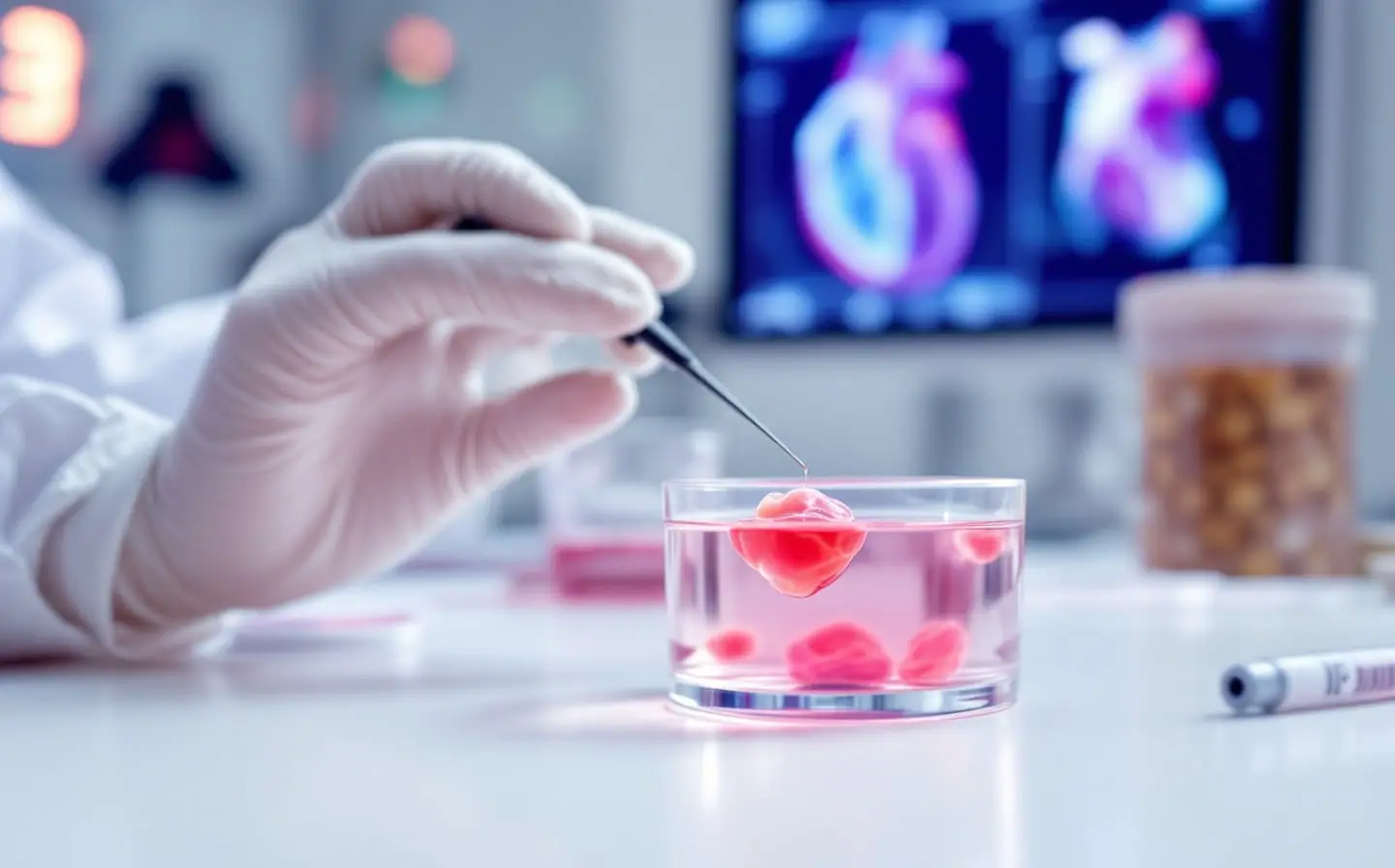
In the early 2000s, cardiology seemed close to something remarkable. Animal studies suggested that stem cells could rebuild muscle lost in a heart attack, small human trials reported stronger hearts within months, and hospitals across Europe and the United States started infusing patients' own bone marrow cells into their coronary arteries. Twenty years and thousands of trial participants later, no cell therapy is approved anywhere to repair heart muscle after a heart attack. What happened in between is one of the most instructive stories in modern medicine, and it is not finished.
The problem: hearts barely regrow
Heart muscle cells, called cardiomyocytes, do renew, but very slowly. A 2009 study in Science that used carbon dating from Cold War nuclear tests estimated a turnover of about 1 percent a year in young adults, falling to under half a percent in old age. A large heart attack can destroy on the order of a billion of those cells in a few hours. The body cannot replace them, so it lays down scar tissue instead. The scar does not contract, the rest of the heart works harder to compensate, and over months to years the chamber can stretch and weaken. That process, called remodeling, is a major route to heart failure.
Modern care has changed the odds: fast reopening of blocked arteries, stents and drugs that protect the heart from remodeling all save lives. But none of them puts muscle back. That gap is what cell therapy set out to fill.
Act one: bone marrow cells, 2001 to 2010
The starting gun was a 2001 mouse study claiming that bone marrow cells injected into damaged hearts turned into new heart muscle. Within a year, German teams were giving patients their own bone marrow cells through a catheter in the coronary artery a few days after a heart attack. The method was attractive: the cells came from the patient, needed little processing and could be delivered during a routine catheter procedure.
Early randomized results looked encouraging. In BOOST (Lancet, 2004), 60 patients who received bone marrow cells had a bigger rise in left ventricular ejection fraction, the share of blood pumped out with each beat, at six months than untreated controls. In REPAIR-AMI (New England Journal of Medicine, 2006), 204 patients were randomized to cells or placebo; ejection fraction rose by 5.5 percentage points with cells versus 3.0 with placebo at four months.
Then the signal started to fade:
- BOOST's 18-month follow-up (Circulation, 2006) found the treated and control groups had converged. The benefit had not lasted.
- ASTAMI, a Norwegian trial published alongside REPAIR-AMI, found no improvement at all.
- In 2004, two independent laboratories reported that bone marrow cells placed in mouse hearts did not become heart muscle, undercutting the original idea.
Act two: the c-kit collapse
Attention shifted to cells thought to live in the heart itself. A laboratory led by Piero Anversa, which moved to Harvard Medical School and Brigham and Women's Hospital in the late 2000s, published a long series of papers describing "cardiac stem cells," identified by a surface protein called c-kit, that could supposedly regenerate heart muscle. The work shaped funding decisions and launched clinical trials, including SCIPIO, which reported dramatic early results in the Lancet in 2011.
Other laboratories could not reproduce the findings. A 2014 study in Nature that tracked c-kit cells in mice found they produced almost no new heart muscle. The institutions investigated, and the hospital paid $10 million in 2017 to settle allegations that work from the lab had been used to obtain federal grants improperly. In October 2018, Harvard and the Brigham recommended that 31 papers from the lab be retracted because they contained falsified or fabricated data. The Lancet retracted the SCIPIO paper in 2019.
The fallout reached a federally funded trial. Within weeks the National Heart, Lung, and Blood Institute paused CONCERT-HF, a study testing c-kit cells and bone marrow stromal cells in heart failure, while its safety board reviewed it. The trial was later completed and reported in 2021 (European Journal of Heart Failure): in 125 patients, none of the cell treatments improved ejection fraction, heart size or scar size. One group had fewer major cardiac events and others reported better quality of life, which the authors described as worth further study.
Act three: the big trials
By the mid-2010s, the field had dozens of small studies with conflicting results, and two analyses showed how fragile the evidence was.
- A 2015 Cochrane review pooled 41 randomized trials with about 2,700 participants. Bone marrow cell treatment after a heart attack did not reduce deaths, repeat heart attacks or heart failure hospitalizations, and showed no effect on ejection fraction measured by MRI, the most precise method.
- The DAMASCENE analysis (BMJ, 2014) counted more than 600 factual discrepancies in reports from 49 trials. The more discrepancies a trial's papers contained, the bigger the benefit it reported. The five trials with no discrepancies showed no effect.
The field's answer was a trial large enough to settle the question. BAMI was a European study designed to test whether bone marrow cells reduced deaths after heart attack. Recruitment fell far short. When it reported in the European Heart Journal in 2020, it had enrolled 375 patients; deaths at two years were similarly low in both groups (about 3 to 4 percent), and the authors concluded the trial could no longer test its main hypothesis.
Attention moved to chronic heart failure and to donor cells. DREAM-HF (Journal of the American College of Cardiology, 2023) injected mesenchymal precursor cells from donors directly into the heart muscle of 565 people with heart failure. It missed its primary goal of reducing repeat heart failure events, and its main secondary goals were also negative. The authors pointed to fewer heart attacks and strokes in treated patients in exploratory analyses, a signal that would need its own trial to confirm. CHART-1, a European trial of conditioned bone marrow cells, was also neutral on its primary endpoint in 2017.
What the failures taught
| Trial or event | Year | Main lesson |
|---|---|---|
| BOOST 18-month follow-up | 2006 | Early gains in pumping function can vanish with longer follow-up |
| REPAIR-AMI and ASTAMI | 2006 | Similar trials gave different answers; small effects are hard to pin down |
| c-kit retractions | 2018 | Replication matters; a whole sub-field rested on unreliable data |
| Cochrane review | 2015 | Pooled trials showed no effect on deaths or major events |
| DAMASCENE | 2014 | Sloppy reporting tracked with bigger claimed benefits |
| BAMI | 2020 | Large outcome trials are hard to enroll when standard care already works well |
| CONCERT-HF | 2021 | No change in heart structure; mixed secondary signals |
| DREAM-HF | 2023 | Primary and secondary endpoints negative; exploratory signals only |
Two scientific lessons stand out. First, injected adult cells mostly disappear within days and do not turn into heart muscle. Second, whatever modest benefit was seen probably came from signals the cells release (often called paracrine effects) or from the inflammation the injection itself causes. A 2020 mouse study in Nature found that even dead cells, or a substance that simply provokes an immune response, could produce a similar short-term effect. That reframed much of the earlier work. Our explainer on bone marrow and mesenchymal stromal cells covers what these cells can and cannot do.
Act four: building new muscle
If adult cells will not become heart muscle, the logical next step is to make real cardiomyocytes in the lab and put them in. Induced pluripotent stem (iPS) cells, which can be turned into almost any cell type, make that possible at scale. Our page on stem cell technology explains how such cells are grown and manufactured.
Early animal work showed both promise and danger. Cardiomyocytes injected as loose cells into monkey hearts survived and integrated, but caused bursts of abnormal heart rhythm while they settled in. Two groups have moved toward delivering organized tissue instead:
- In Germany, a team in Göttingen built patches of engineered heart muscle from iPS cells and reported in Nature in January 2025 that the grafts survived and strengthened failing monkey hearts without rhythm problems or tumors. Its phase 1/2 trial in people with advanced heart failure reported interim results in the New England Journal of Medicine in May 2026. Twenty patients were treated, all on immunosuppressive drugs. In the 16 who received the highest safe dose, the treated heart wall thickened and ejection fraction rose by about 4 percentage points at three months. Every patient had at least one adverse event, and three died during the study (from vasoplegia, COVID-19 and an aortic dissection). It was open-label with no control group.
- In Japan, sheets of heart muscle cells made from donor iPS cells, developed from Osaka University research, received conditional, time-limited approval from Japan's health ministry in early 2026 for severe heart failure caused by ischemic heart disease. The supporting studies were small, with fewer than ten patients, and the developer must gather more evidence of benefit to keep the approval. Japan's conditional system has a cautionary precedent: an earlier sheet of skeletal muscle cells for heart failure, approved the same way, was later withdrawn when follow-up failed to show it worked.
These products still face the questions that sank earlier approaches: whether the effect lasts, whether it beats a sham procedure, and whether benefits outweigh the risks of surgery and immunosuppression. Our piece on why most drugs fail between phase 2 and approval explains why promising early numbers often shrink in controlled trials.
What this means for patients now
- No cell therapy is approved in the United States or Europe to repair heart muscle after a heart attack or to treat heart failure.
- The treatments that are proven to help after a heart attack are the standard ones your cardiology team already offers, including artery-opening procedures, medicines that protect the heart and cardiac rehabilitation.
- Engineered heart muscle and iPS-derived cell sheets are available only in trials, or in Japan under a conditional approval for a narrow group of patients.
- Clinics selling stem cell infusions for heart disease outside a trial are selling an unproven product. The FDA has warned that such products are being marketed illegally and that they carry real risks.
- If you want to explore research options, ask your cardiologist and look at listings on ClinicalTrials.gov. Our page on translational medicine explains how a trial moves from early safety testing to the evidence regulators require.
One habit is worth carrying from this history into any new headline: check how long patients were followed and whether there was a control group. The early bone marrow trials looked best at four to six months and without blinding, and the benefit faded once trials got longer and stricter.
General information for readers, not medical, legal or financial advice. Questions about your own situation belong with a qualified professional.