Biotech Explained · Regenerative Medicine
How a cell therapy is made, from donor to dose
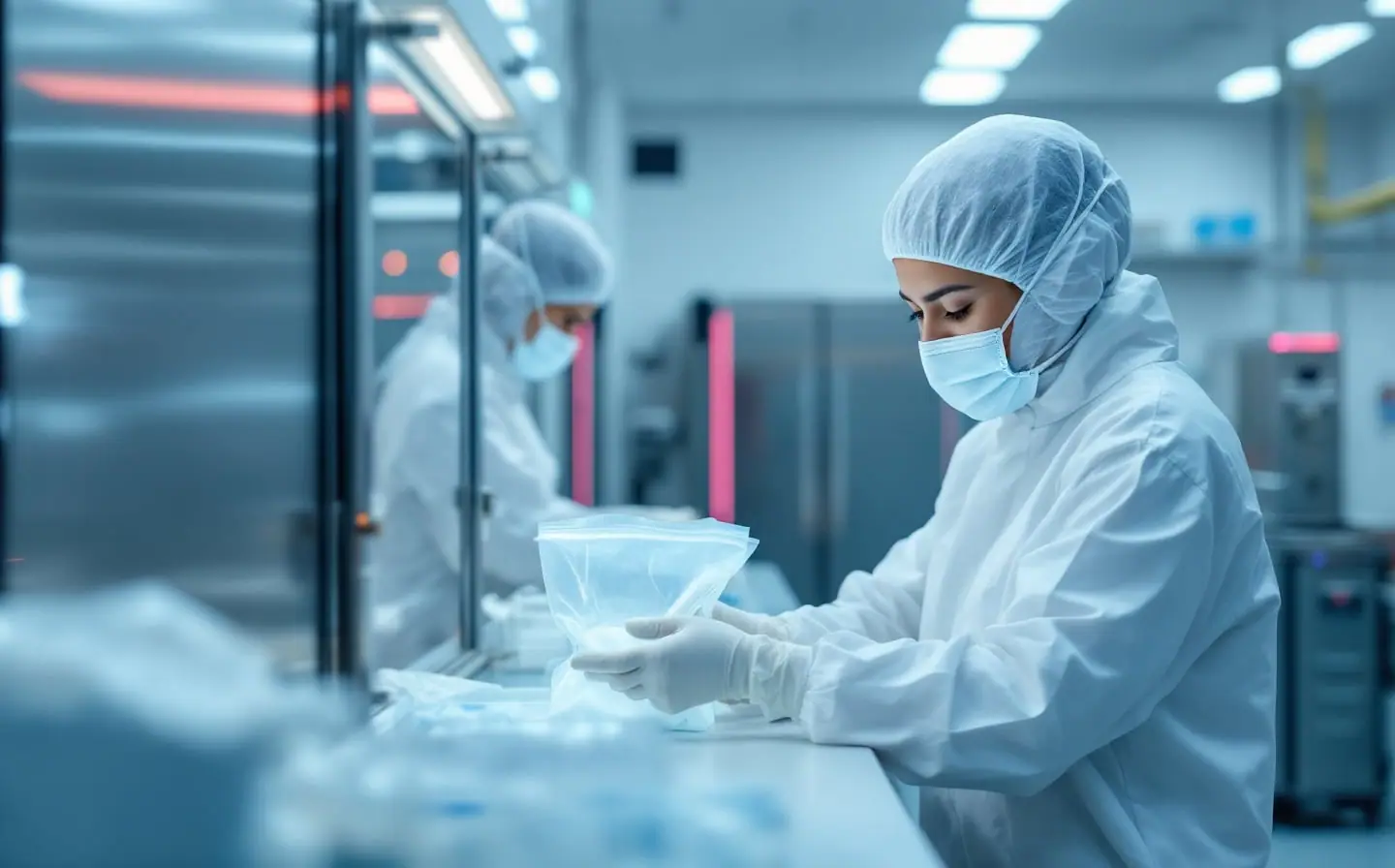
A tablet factory can press millions of identical doses from one batch of powder. Many cell therapies work the other way around: one batch, one patient, made from that patient's own blood, with a manufacturing record that has to follow the bag the whole way. Walking through that process step by step explains most of what puzzles people about these products, from the waiting time to the price.
Two kinds of supply chain
Every cell therapy starts with living cells from a person. Whose cells they are decides almost everything else.
| Autologous | Allogeneic | |
|---|---|---|
| Starting cells | The patient's own | A healthy donor's |
| Batch size | One batch treats one patient | One donor can supply one or many doses |
| Immune match | Not an issue | May need matching or immune suppression |
| When it is made | After the patient is referred | Ahead of time, then stored |
| Examples | CAR-T products such as Kymriah (approved 2017) | Cord blood units; Omisirge (2023); Lantidra donor islet cells (2023) |
Autologous products build a loop: cells leave the patient, travel to a factory, come back changed, and go into the same person. Allogeneic products look more like conventional manufacturing, with inventory on a shelf, although even they rarely approach the batch sizes of a drug. For a plain account of how CAR-T works inside the body, see our CAR-T explainer.
Chain of identity and chain of custody
Two terms come up in every conversation about this field.
Chain of identity is the unbroken link between a person and their material. Each collection gets unique identifiers that appear on every bag, sample tube, form and electronic record, and each handoff checks them. Many centers use ISBT 128, an international labeling standard for blood and cellular products.
Chain of custody is the record of who held the material, where, when and at what temperature. It answers a different question: not "whose cells are these?" but "can we prove nothing happened to them on the way?"
In an autologous product a lapse in either chain is not a paperwork problem. Infusing the wrong person's cells could be catastrophic, so both chains are designed to be checked by two people at each step. Larger producers run dedicated scheduling and tracking software that ties the hospital, the courier and the factory to one record, so that a bag scanned at any point shows whose it is and where it should be going next.
From donor to dose, step by step
1. Referral and slot booking
For an autologous product, a treatment center confirms the patient qualifies and books a manufacturing slot with the producer. Slots are a real constraint, and some CAR-T launches had waiting lists because factories could not run enough batches in parallel. For an allogeneic product, the equivalent step is donor screening: health history plus testing for infections such as HIV and hepatitis B and C, under FDA donor eligibility rules.
2. Collection
The most common route is apheresis. Blood flows from a vein into a machine that spins out the white cells needed and returns the rest, a process that usually takes a few hours. Donors of blood stem cells first receive drugs that move those cells out of the marrow and into the bloodstream. Other starting materials include bone marrow, cord blood collected after a birth, and, for islet cell therapy, a pancreas from a deceased donor.
3. Packing and transport of starting material
The labeled bag either travels fresh, kept cool and racing a time limit measured in hours, or is frozen near the collection site first. A temperature logger rides along.
4. Receipt and inspection
At the manufacturing site, staff confirm the identifiers, review the temperature record, count the cells and take samples. Starting material from a very sick patient can contain few usable cells, which is one reason some batches fail later.
5. Selection
The process isolates the cells it wants, for example T cells for CAR-T or CD34-positive cells for blood stem cell products, often using magnetic beads coated with antibodies.
6. Activation and gene modification
For gene-modified products, T cells are stimulated to divide and then exposed to a disabled virus (usually lentiviral or gamma-retroviral) carrying the new gene. Some newer processes use non-viral methods instead, such as electroporation, which briefly opens pores in the cell membrane so genetic material can enter. Unmodified products skip this step.
7. Expansion
Cells grow in bags or bioreactors for days to a couple of weeks, inside closed systems where possible, in cleanrooms run by gowned operators. Some products expand cells that are normally scarce, as described in our page on expanding cord blood stem cells outside the body. Our stem cell technology explainer covers culture and cryopreservation in more depth.
8. Harvest and formulation
Cells are concentrated, washed free of culture reagents and suspended in a freezing solution, commonly one containing DMSO, then filled into infusion bags.
9. Controlled-rate freezing
A programmed freezer cools the bags slowly, often around 1 degree Celsius per minute, so that ice forms in a way cells survive. They are then stored in the vapor phase of liquid nitrogen, below about minus 150 degrees Celsius.
10. Release testing
Quality control checks sterility, mycoplasma and endotoxin, plus identity, purity, viability, cell dose and potency. Gene-modified products add tests such as vector copy number and screening for virus that can replicate. A classic sterility culture takes about two weeks, which shapes timelines. Products with a very short shelf life may be released on earlier in-process results, with a plan agreed in advance for alerting the treating doctor if a final test later comes back positive. Quality assurance then reviews the full batch record before the product can ship. A batch that misses a specification is not simply sent anyway, though in some cases regulators allow it to be provided under a separate protocol.
11. Cryoshipping
Frozen products travel in dry shippers, insulated containers whose lining soaks up liquid nitrogen so there is no free liquid to spill but the inside stays cold for days. Couriers track location and temperature continuously, and the chain of custody record grows with every handoff.
12. Receipt, thaw and infusion
The treatment center stores the product until the patient is ready. For CAR-T, that usually means a short course of conditioning chemotherapy beforehand. At the bedside, two staff members match the bag to the patient, the bag is thawed (typically in a 37 degree water bath or dry thawing device), and the cells are infused within a short window.
Vein-to-vein time
The interval from collection to infusion is called vein-to-vein time. For approved autologous CAR-T products in routine use, it commonly runs to several weeks. That matters because the patients involved often have aggressive cancers, and some need bridging treatment while they wait. A few become too sick to receive the product at all.
Manufacturing itself is often not the largest share of that time. Scheduling, shipping both ways, waiting for test results and batch record review can together take as long as growing the cells, which is why producers chase faster assays and simpler paperwork as hard as they chase faster culture.
Allogeneic products cut this down because the dose already exists. When a cord blood unit is selected from a public bank, the wait is mostly searching, confirming and shipping, not manufacturing.
Why the price is so high
When Kymriah was approved in 2017, its US list price was widely reported at $475,000, and later CAR-T products launched in a similar range. Several costs stack up behind figures like that.
- Each autologous batch is a full manufacturing run with its own cleanroom time, operators, reagents and paperwork, but it yields one patient's dose.
- Viral vectors are expensive to make and test.
- Every batch needs the complete panel of release tests, and some batches fail.
- Courier networks, dry shippers, tracking software and site training all cost money for every single patient.
- Development spending is spread over relatively small patient numbers.
List price also excludes the hospital's side: apheresis, conditioning, the infusion and monitoring afterwards.
Scale-up versus scale-out
Conventional biologics get cheaper per dose by scaling up: a bigger tank, more product per batch. That route is open mainly to allogeneic therapies, which can start from a well-characterized donor or cell bank and grow larger lots. The catch is that cells often behave differently in bigger vessels, and every change has to be shown to give a comparable product.
Autologous therapies can only scale out: more small batches running side by side. Each additional patient needs another production line's worth of space and staff, so costs fall slowly. Automated closed systems that run most steps in one cassette, and manufacturing at or near the hospital, are two current attempts to cut the labor in each batch.
If you read a cell therapy company's filings, the useful manufacturing numbers are slot capacity, the share of batches that meet specification, and median vein-to-vein time. Our guide to reading a biotech company's filings shows where those figures tend to appear. Of the three, batch success rate deserves the most attention, because every failed batch is a patient who was collected and did not get a dose.
This explainer is general information, not medical advice. Decisions about treatment, donation or trials belong with a clinician who knows your history.