
What fresh cabinet paint does to the air in your kitchen, and what actually helps
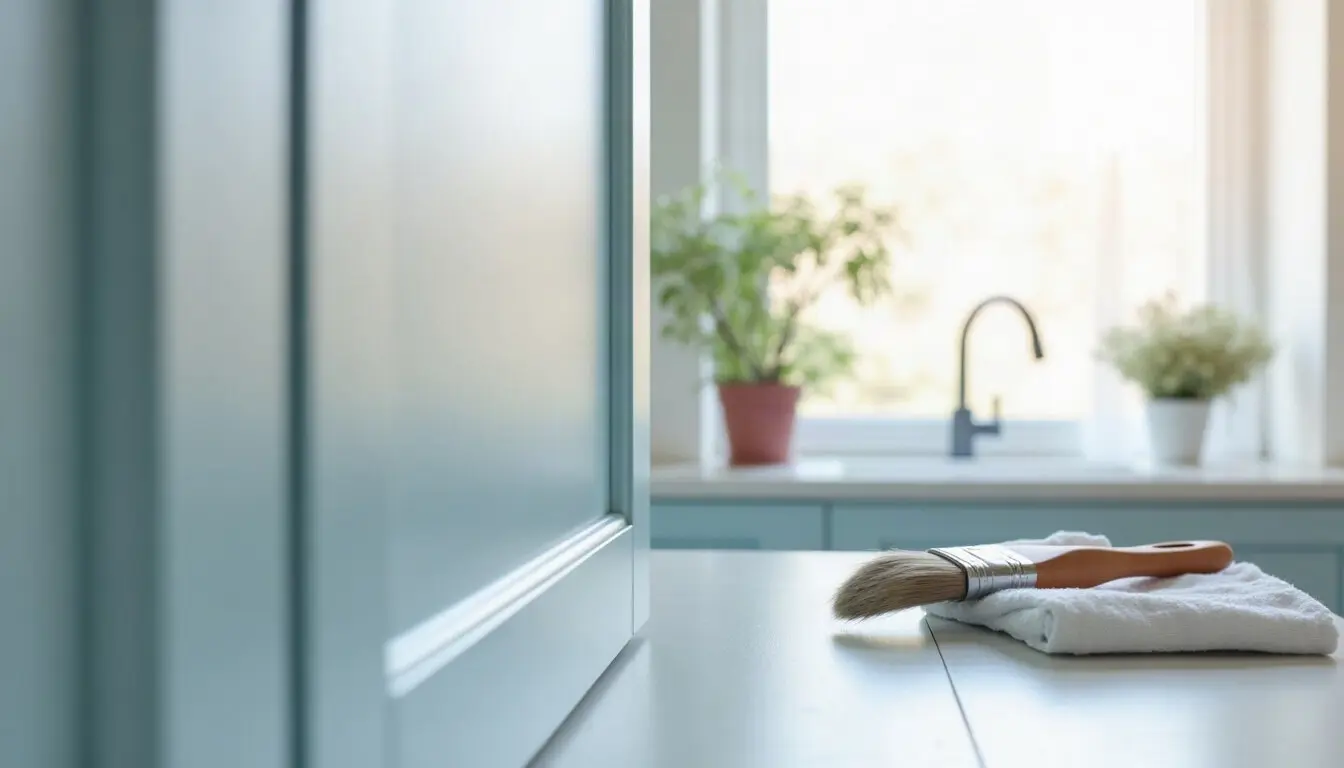
The cabinet doors look finished by dinner time, smooth and evenly colored, but the kitchen still smells sharply of paint the next morning. A day later the smell has faded, yet the doors feel faintly tacky where a hand rests on them. It is a small puzzle with a real answer: dry to the touch and fully cured are two different stages.
If you're researching kitchen cabinet painting Colorado Springs homeowners can plan around, it helps to know what happens in the air and on the surface while new paint sets, and what reduces the fumes in a room where you cook and eat.
Under the microscope: Paint is a mix of pigment, a binder that forms the film, and a liquid that keeps everything spreadable. As the liquid evaporates, it carries volatile organic compounds, or VOCs, carbon-based chemicals that turn into vapor at room temperature, into the air. The surface skins over quickly, but the binder keeps hardening and releasing small amounts of vapor for days or weeks afterward, a slow process called curing.
Drying and curing are two separate stages
In my years coordinating clinical studies, I learned to respect the gap between "looks done" and "is done". A sample can look ready long before it is stable. Paint behaves the same way.
Drying is mostly evaporation. The water or solvent leaves, and the film becomes firm enough to touch. Curing is chemistry: the binder molecules link up or pack together into a hard, durable layer. Until that finishes, the finish is softer than it will be, more likely to mark, and still releasing some vapor.
Cabinets make this distinction matter more than walls do. Doors are handled many times a day, they rub against each other, and dishes and food sit inside them. Rehanging doors or loading shelves too early can leave dents, stuck edges and fingerprints in the finish. A good painter plans the work around curing time, not only drying time.
Climate plays a part. Colorado Springs has dry air, which speeds up evaporation at the surface. That can be helpful, but it can also cause the outer layer to skin over before the paint underneath has leveled, which is one reason experienced painters adjust their methods to the conditions on the day.
What fresh paint puts into kitchen air
VOCs are the reason new paint smells. In the short term, high levels in a closed room can cause headaches, dizziness, and irritation of the eyes, nose and throat. People with asthma or other breathing problems may notice it more. The general public health advice is simple: ventilate well during and after painting, and limit time in a freshly painted room when you can.
Water-based paints generally release fewer VOCs than older solvent-based paints, and "low-VOC" and "zero-VOC" products have become common. Those labels are useful but not magic. They usually refer to the base paint, and tints, primers and additives can add their own compounds. Even a low-VOC paint still needs time and fresh air to cure.
The method matters too. Spraying gives cabinets a smooth finish, but it also puts a fine mist of paint into the air. Professionals deal with this by masking off the room, protecting counters and appliances, ventilating the space, and wearing appropriate respirators. That containment is part of the job, not an extra.
A step-by-step way to lower exposure
Here is the order I would follow, whether you hire the work out or simply want to know what a careful crew should be doing:
- Clear the food first. Empty the cabinets completely and store food, dishes and utensils in another room, sealed or covered.
- Plan the airflow. Open windows where possible and use a fan that pushes air out of the house, not one that just moves fumes around the kitchen.
- Keep vulnerable people away. Babies, people who are pregnant, anyone with asthma and pets are better off out of the space during painting and the first days afterward. If anyone in the house has a health condition, talk to their doctor about timing.
- Respect the cure time. Ask your painter how long the specific product needs before doors are rehung and shelves are loaded, and follow it.
- Keep ventilating. Even after the smell fades, some vapor is still leaving the finish. Fresh air for the following days speeds that up.
- Wipe gently at first. Use only a soft damp cloth on new cabinets until the finish has fully cured, and avoid harsh cleaners.
One safety point stands apart. In older homes, cabinets and trim may carry layers of old paint that contain lead. Sanding or scraping lead paint creates dust that is harmful, especially to children. Testing and preparing old painted surfaces is a job for licensed professionals trained in lead-safe work practices, not a weekend project.
Sorting the claims by strength of evidence
Paint marketing makes a lot of promises, and some deserve more trust than others.
Well established
- Fresh paint releases VOCs, and ventilation lowers indoor levels.
- Water-based paints generally release fewer VOCs than solvent-based ones.
- Old paint may contain lead, and disturbing it creates hazardous dust.
- A finish keeps hardening for some time after it feels dry.
Plausible, but depends on the product and the room
- Low-VOC labels usually mean less odor and lower emissions, though tints and primers can add compounds.
- Running an air purifier with an activated carbon filter may reduce some odors, but it does not replace fresh air.
Marketing rather than science
- Claims that a paint "purifies" or "cleans" the air in your home.
- The idea that a bowl of onions, vinegar or charcoal on the counter will absorb paint fumes in a meaningful way.
- Promises that a cabinet finish is fully hard and ready for heavy use within hours.
Choosing the right help
Painting cabinets is more demanding than painting a wall. The doors and frames have to be cleaned of kitchen grease, which is what usually makes cheap jobs peel, then sanded or deglossed, primed with a product that bonds to the existing surface, and finished in thin, even coats. Each stage affects both how the finish looks and how long it lasts.
A careful contractor will walk you through that process, tell you which products they plan to use and why, and set realistic expectations about how long your kitchen will be out of action. When a quote seems far faster than everyone else's, it is worth asking which stage is being shortened.
Kitchens add their own conditions that a wall in a bedroom never faces. Steam from the stove and the dishwasher, heat near the oven, splashes by the sink and the constant film of cooking grease all test a finish every day. That is why preparation and product choice carry more weight here than almost anywhere else in a house. A finish chosen for durability and applied over a properly cleaned and primed surface tends to shrug off daily wiping, while one applied over leftover grease can start to lift at the edges where hands touch most.
It also helps to agree on the plan for the room before work starts. Ask where the doors will be painted, whether on site or elsewhere, how the kitchen will be sealed off from the rest of the house, and where you can cook in the meantime. Clear answers to those practical questions are a good sign that the rest of the job will be handled with the same care.
Questions to ask a professional
- Which primer and paint will you use, and what are their VOC levels?
- Will you spray or brush, and how will you contain the overspray and protect the rest of the kitchen?
- How long should we wait before rehanging doors, loading shelves and cleaning the surfaces?
- How will you check for and handle old paint that might contain lead?
- What should we do to ventilate the house in the days after you finish?
A kitchen with freshly painted cabinets should smell like nothing at all within a few weeks, and good preparation is what gets you there.
This explainer is general information, not medical advice. Decisions about treatment, donation or trials belong with a clinician who knows your history.